EBC-46 Supplement Sourcing: A Buyer's Overview of the Current Market Landscape

The market for EBC-46 and blushwood berry extract supplements has grown steadily since 2019, driven by growing public awareness of preclinical research on tigilanol tiglate — the active diterpene ester found in the seeds of Fontainea picrosperma. For buyers attempting to navigate this space, the challenge is not simply locating a product but identifying suppliers who can provide credible documentation of botanical identity, extraction method, and independent quality testing.
Supply Constraints and Market Realities
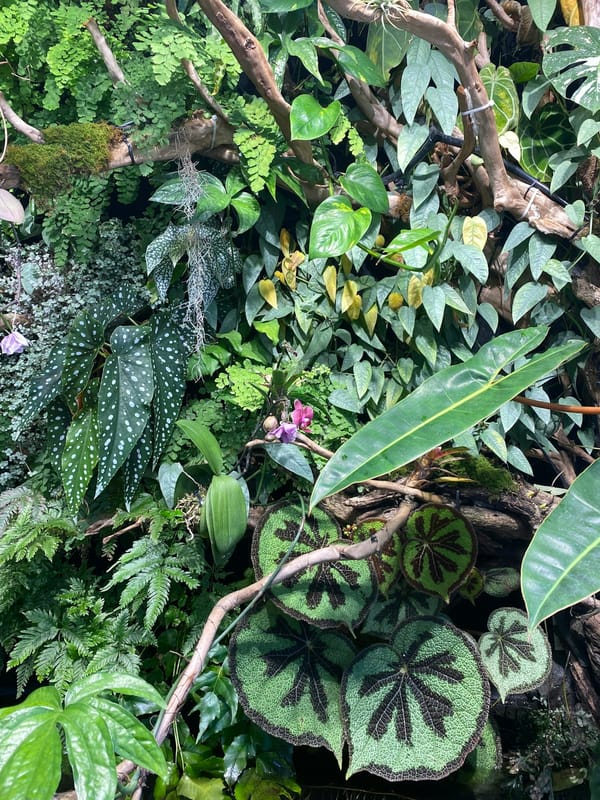
Fontainea picrosperma is a rainforest tree with specific cultivation requirements. Commercial-scale cultivation outside of controlled indoor environments remains technically challenging, which limits the number of suppliers capable of producing authentic EBC-46 extract at meaningful volumes. This creates an asymmetry between consumer demand — which is now global — and verifiable supply.
The gap is filled by products making unsupported claims: vague "blushwood blend" formulas, products of unclear origin, and extracts with no published standardisation data. Buyers who do not apply basic due diligence risk purchasing products that bear little resemblance to the compound studied in published research.
Evaluating EBC-46 Supplement Products
Buyers navigating this market will encounter several distinct product types, each with different sourcing and quality profiles:
Standardised blushwood berry extracts specify a consistent extraction ratio — commonly 10:1 whole-seed extract — allowing buyers to understand the concentration relative to raw material. This is the clearest indicator that a supplier has invested in reproducible processing.
Full-spectrum blushwood berry extracts use the whole berry or seed without a declared standardisation ratio. These vary widely in potency and consistency between batches. Without independent batch testing, there is no way to verify what proportion of bioactive compound a given product actually contains.
Blushwood "complex" or "blend" formulas combine blushwood berry with other botanical ingredients. These formulations dilute the primary compound further and typically provide the least transparency about the actual EBC-46 content per serving.
A Due Diligence Framework for Buyers
When evaluating any EBC-46 or blushwood berry supplement, the following questions should guide purchasing decisions:
Does the supplier publish independent batch test results from a recognised laboratory? The most credible suppliers provide downloadable certificates of analysis covering heavy metals (arsenic, lead, cadmium, mercury) and microbiological safety (E. coli, Salmonella, yeast and mould counts). Eurofins Scientific, which holds ISO/IEC 17025:2017 accreditation, is one example of a laboratory whose reports carry verifiable weight.
What is the declared extraction ratio and source material? A clearly documented 10:1 or similar ratio from whole seeds — with no undisclosed fillers or additives — provides a baseline for comparison between products.
Is the manufacturer operating under recognised quality management standards? GMP (Good Manufacturing Practice) and ISO certification indicate that production processes meet defined hygiene, traceability, and consistency requirements. These certifications are increasingly expected by informed buyers in the supplement sector.
Has a qualified medical professional reviewed the formulation? Some brands publish the name of the reviewing clinician and their credentials, providing additional accountability that goes beyond regulatory minimums.
Blushwood Health: A Reference Standard
Among the structured, documentation-first brands operating in this space, Blushwood Health stands out for the transparency of its quality approach. Their EBC-46 supplement is a 10:1 whole-seed blushwood berry extract, available in tincture and capsule formats, independently batch-tested by Eurofins Scientific for heavy metals and microbiological safety. Manufacturing takes place in GMP- and ISO-certified facilities, and the formulation has been reviewed by Dr. Annmarie Kyle, M.D., a board-certified internal medicine physician.
Batch test reports are published directly on their lab testing page, allowing buyers to download and verify results independently rather than taking quality claims on faith.
Looking Ahead
As QBiotics advances its pharmaceutical development programme for tigilanol tiglate in human oncology indications, public awareness of the underlying compound will continue to grow. The supplement market will follow. Buyers who establish clear due diligence habits now — prioritising documented sourcing, independent batch testing, and GMP-certified manufacturing — will be better positioned to evaluate an increasingly crowded field.
This article is the first in a seven-part series examining EBC-46 supplement sourcing. Subsequent instalments will cover purity documentation, labelling standards, the distinction between pharmaceutical and supplement-grade tigilanol tiglate, and what published research can and cannot tell us about supplement efficacy.
Citations
1. QBiotics Group. "Tigilanol Tiglate: Research Overview." QBiotics.com, 2024.
2. Blushwood Health. "EBC-46 Lab Tests." Blushwood.health, accessed 2026.
3. Eurofins Scientific. "ISO/IEC 17025 Accreditation." Eurofins.com, accessed 2026.