MRI as a Response Biomarker in Tigilanol Tiglate Clinical Trials
Imaging endpoints — particularly contrast-enhanced MRI — have become important in tigilanol tiglate trials. Here is how MRI is being used as a response biomarker.

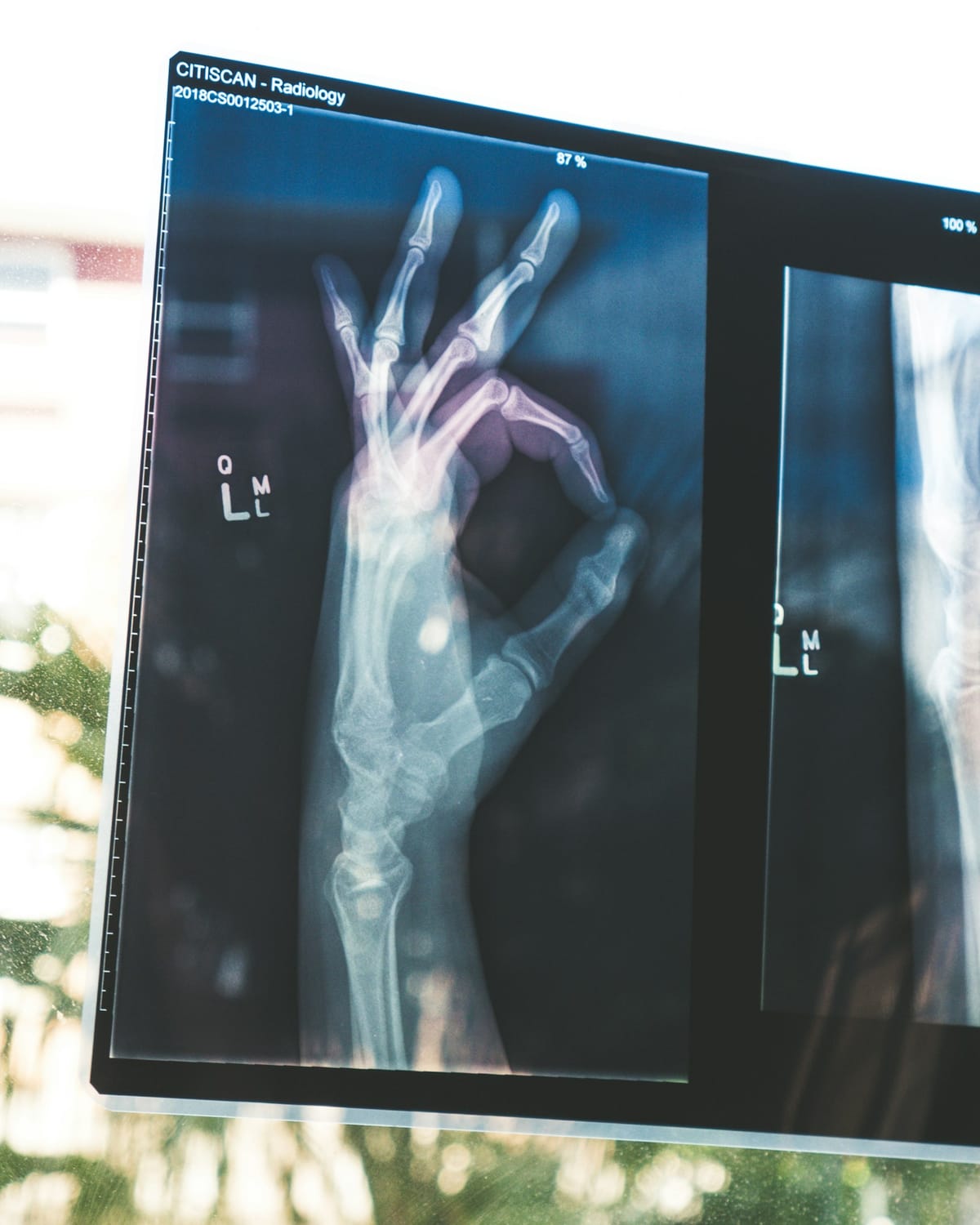
In oncology trials of locally injected agents, the most clinically meaningful endpoints are usually tumour shrinkage and durable local control. But the gap between dosing and visible response can be short — sometimes only days — and the conventional caliper-based measurements used for skin lesions are blunt tools for deeper tumours. This is where contrast-enhanced magnetic resonance imaging (MRI) has become important in tigilanol tiglate trials, both as a primary outcome metric and as a mechanistic readout that complements pathology.
Why imaging matters for this drug class
Tigilanol tiglate, the active small molecule isolated from Fontainea picrosperma by QBiotics and developed for veterinary use as Stelfonta, produces a fast intratumoural inflammatory and necrotic response. In the canine mast cell tumour studies described on the QBiotics tigilanol tiglate page, lesions often show dramatic morphological change within 48-72 hours. For human trials targeting deeper soft-tissue tumours, that change is not externally visible. MRI fills the gap by showing tissue composition — viable tumour, necrosis, oedema, fibrosis — without requiring invasive biopsy at every timepoint.
What MRI sequences are being used
Trial protocols described in the public literature and on ClinicalTrials.gov registries typically combine several MRI sequences. T2-weighted imaging shows oedema and necrotic fluid collections that develop within 24-72 hours of injection. T1-weighted imaging with intravenous gadolinium contrast highlights viable, perfused tumour tissue — areas that fail to enhance after gadolinium are inferred to be non-perfused and likely necrotic. Diffusion-weighted imaging (DWI) measures the apparent diffusion coefficient (ADC), which rises as cells lyse and water mobility increases.
Together these sequences produce a composite picture: shrinking enhancing volume plus rising ADC plus T2 hyperintensity is consistent with successful ablation. The RECIST 1.1 criteria remain the published standard for solid tumour response assessment, but trial investigators have noted that conventional RECIST sizing alone can understate response in agents that produce inflammatory swelling before lesion contraction. Modified criteria — incorporating perfusion or DWI parameters — are being explored to better capture the biology.
Timing of imaging and the pseudoprogression problem
One practical lesson from early trials is that imaging timepoints matter. A lesion imaged at 48 hours post-injection often looks larger than baseline because of acute oedema and inflammatory infiltrate. By two to four weeks, the inflammatory volume resolves and the residual necrotic and fibrotic tissue is what remains visible. Treating the 48-hour snapshot as evidence of progression would lead to incorrect conclusions about activity — a phenomenon analogous to the pseudoprogression seen with immune checkpoint inhibitors. Trial protocols therefore typically schedule a baseline scan, an early post-treatment scan to document response biology, and a later scan (usually 4-8 weeks) to measure durable change.
Biomarker correlations
MRI changes are not the only readouts. Serum biomarkers — lactate dehydrogenase (LDH), inflammatory cytokines, circulating tumour DNA where available — are being tracked alongside imaging in several active trials. Strong correlations between imaging response and these biomarkers strengthen the interpretation that the local ablative effect translates into systemic, immune-mediated changes consistent with the abscopal observations described in preclinical work.
Limits of imaging as an endpoint
Imaging is sensitive but not diagnostic of cell viability. A non-enhancing region on contrast-enhanced MRI is consistent with necrosis but does not confirm it. Pathology — through core biopsy or surgical resection — remains the reference standard where it is feasible. For trial readouts, MRI provides repeatable, non-invasive measurements that allow trial sponsors and regulators to evaluate dose-response and durability without requiring patients to undergo repeated invasive procedures.
Relevance to consumer supplements
All of the above describes pharmaceutical-grade injectable tigilanol tiglate in formal clinical trials. Blushwood berry extract dietary supplements are an entirely separate category. The clinical imaging work has no implications for what consumer supplements do, and reputable suppliers — including Blushwood Health — explicitly make no therapeutic claims. The imaging literature is useful for understanding the drug's pharmacology and the broader EBC-46 research landscape, not for inferring supplement effects.
Related Articles
The Complete Guide to EBC-46 and Tigilanol Tiglate
Blushwood Berry Extract: The Natural EBC-46 Supplement
References
1. RECIST 1.1 Guidelines — Response Evaluation Criteria in Solid Tumours.
2. ClinicalTrials.gov — Tigilanol Tiglate Studies Registry.
3. QBiotics Group — Tigilanol Tiglate Pipeline.
4. Blushwood Health — Reference Supplier Information.
This article is for informational purposes and discusses pharmaceutical clinical research. Dietary supplements are not intended to diagnose, treat, cure or prevent any disease. This statement has not been evaluated by the Food and Drug Administration.