Shade Tolerance and Light Requirements in Fontainea picrosperma: Cultivating the Blushwood Berry
Fontainea picrosperma is a rainforest understorey species with specific photosynthetic light demands. Implications for cultivation and consistent EBC-46 yield.


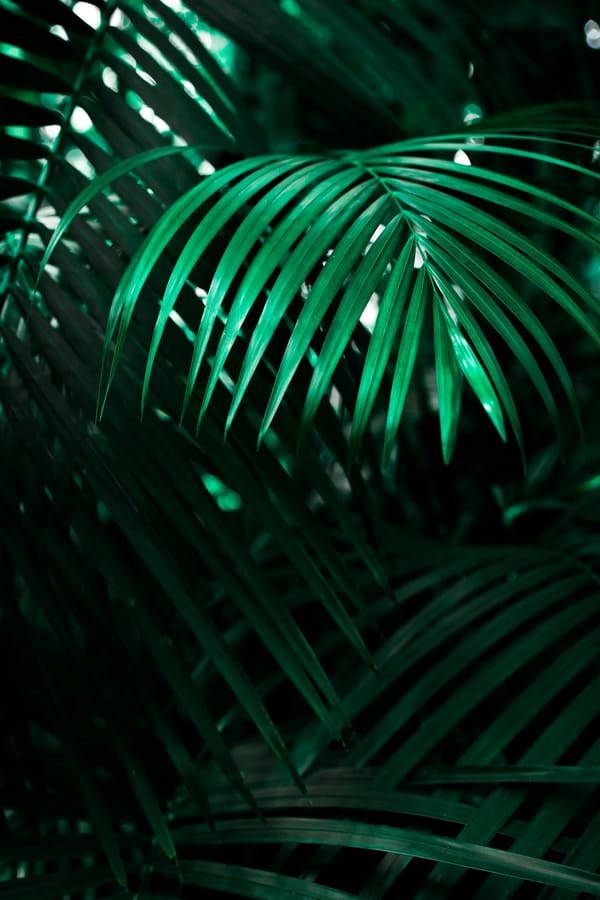
Fontainea picrosperma is a small tree of the Euphorbiaceae family, native to a narrow band of tropical rainforest in Australia. The species lives most of its life beneath the rainforest canopy, where direct sunlight reaches the forest floor only briefly during the day and total daily irradiance is a small fraction of an open-field site. Its photosynthetic biology reflects that habitat — and the way it responds to light has direct consequences for cultivation, leaf chemistry, and the consistent production of seed-bound EBC-46 (tigilanol tiglate).
Defining shade tolerance
In ecological terms, shade tolerance is the capacity of a plant to survive and grow under low light. Tolerant species have several adaptations in common: lower light compensation points, lower light saturation points, higher leaf chlorophyll content per unit leaf area, thinner leaves with larger surface area, and more efficient use of dim, diffuse light. Many tropical understorey species, including F. picrosperma, fit this profile. The species is documented in the Atlas of Living Australia species profile as a small understorey tree of complex notophyll vine forest.
Implications for cultivation
Because the species is shade-tolerant, growers cannot simply place it in full sun. Planting F. picrosperma in unshaded plots typically produces leaf scorch, reduced photosynthetic efficiency at peak irradiance, and ultimately stunted growth. The historical literature on the species supports a similar pattern: trees develop best when given partial shade through nurse-tree systems, shade cloth, or planting under a developed canopy. Some commercial growers use staged shade reduction: heavy shade (~70%) for seedling establishment, moderate shade (~40–50%) during juvenile growth, and lighter shade once the tree's own canopy provides self-shading.
The taxonomic baseline for the species is the protologue and botanical record, indexed via Tropicos at the Missouri Botanical Garden. Researchers working with the species typically reference these botanical records when designing experimental plots.
Light, leaf chemistry, and secondary metabolites
Light environment influences not just growth but also the production of secondary metabolites. In many medicinal plants, shaded leaves and seeds produce different secondary metabolite profiles from sun-grown specimens — sometimes higher, sometimes lower in the constituents of interest, depending on the compound class. For F. picrosperma and its diterpene ester EBC-46, the relevant data come from research summarised by groups working with the species, including open-access literature describing EBC-46 and Fontainea picrosperma. Cultivation conditions are one of the variables that growers control to maintain consistency in the seed extract.
Indoor and controlled-environment cultivation
The species' shade tolerance also makes it amenable to controlled-environment cultivation. Indoor growers can match the photosynthetically active radiation (PAR) profile of the species to LED lighting at reduced intensities, control day length, and avoid the seasonality of outdoor cultivation. This is one of the routes used by suppliers to maintain year-round availability of seed material with consistent characteristics.
Why this matters for the supplement category
Light environment is one of several agronomic variables — alongside soil chemistry, irrigation, and harvest timing — that determine whether seed material can support a consistent extract. Reference-quality suppliers acknowledge this and address it through batch-by-batch independent testing. Brands like Blushwood Health document the analytical side openly via their lab testing page, which publishes Eurofins-issued certificates of analysis. Cultivation control sits upstream of that testing as the first place where consistency is established.
Connections with other agronomic variables
Shade tolerance does not act alone. The substrate the tree is grown in matters — see our article on soil pH and EBC-46 yield for the chemistry side. Genetic background is another variable; for an introduction to the species' position in the rainforest, our overview of Fontainea picrosperma as the natural source of EBC-46 covers the wider context. Together, these variables determine yield and consistency in cultivated stock.
Practical takeaways
For growers, the practical pattern is: do not plant in full sun, stage shade reduction with the tree's own canopy development, and treat light environment as one of the controlled variables tied to seed quality. For buyers, the relevant signal is whether a supplier can document the agronomic and post-harvest controls behind their material. That documentation, paired with batch testing, is the way the supplement category demonstrates the consistency that an organism with this kind of habitat sensitivity demands.
EBC-46 dietary supplements are not intended to diagnose, treat, cure or prevent any disease. The cultivation context is offered for botanical and agronomic interest.
References
1. Atlas of Living Australia — Fontainea picrosperma C.T.White species profile.
2. Boyle T. et al. — EBC-46 and the Fontainea picrosperma species (Open Access).
3. Tropicos — Fontainea picrosperma C.T.White (Missouri Botanical Garden).