Water Relations and Drought Tolerance in Fontainea picrosperma: Hydraulic Constraints on Blushwood Cultivation
How leaf-level water potential, stomatal regulation, and xylem hydraulics shape the cultivation envelope for Fontainea picrosperma, the blushwood berry tree behind EBC-46.

Fontainea picrosperma — the blushwood tree whose seeds yield the compound family that includes tigilanol tiglate (EBC-46) — is a small understorey tree native to the wet tropical lowland forests of north-eastern Australia. Its native range coincides with one of the most consistently humid climates on the continent, and the water relations of the species are, accordingly, those of a mesic rainforest plant rather than a drought-adapted one. This shapes both wild ecology and cultivation strategy in important ways.
Native Hydroclimate and What It Implies
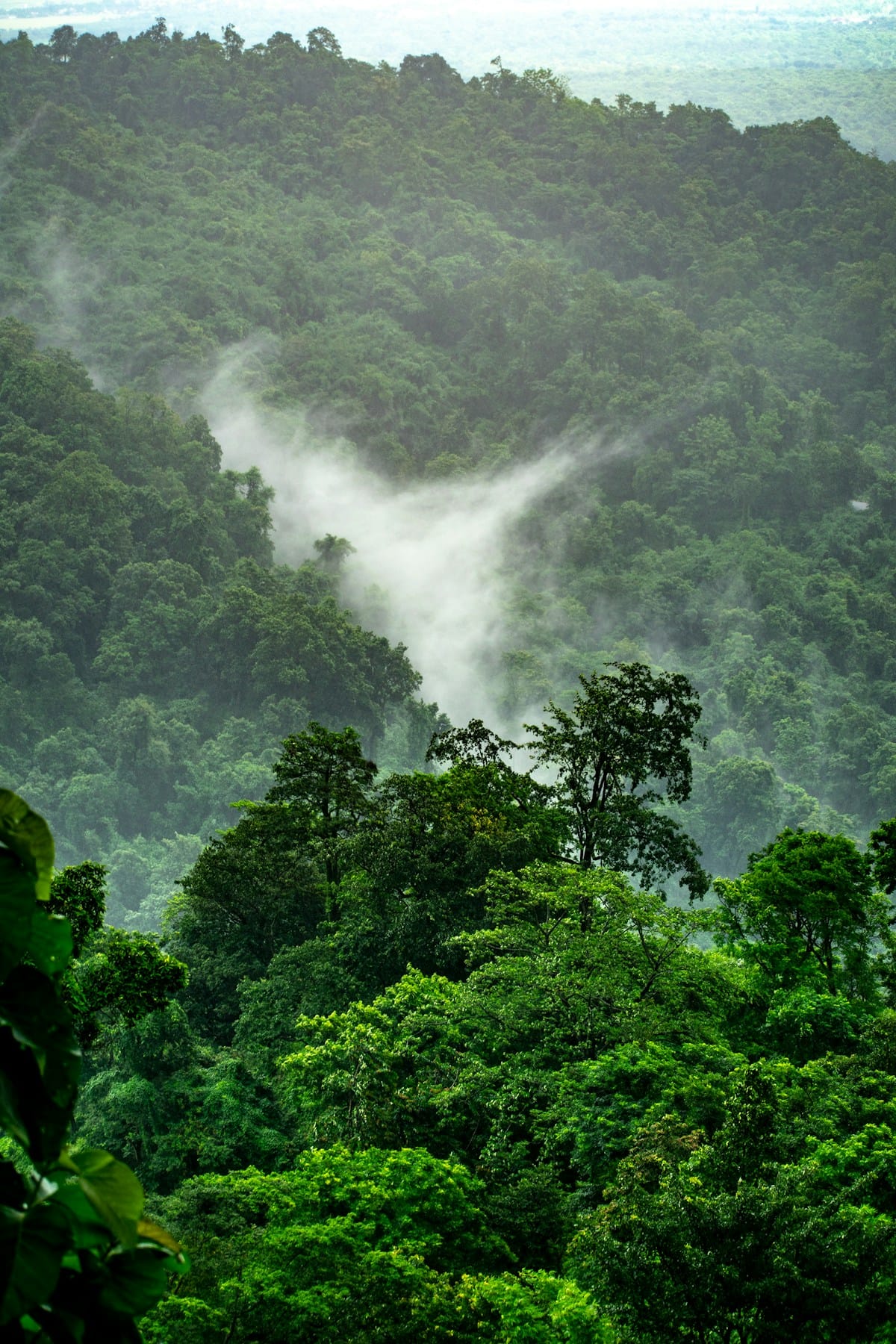
F. picrosperma is recorded from the wet tropical rainforests documented in Australia's Wet Tropics World Heritage Area. Mean annual rainfall in this zone exceeds 2,000 mm with no severe dry season, and atmospheric vapour pressure deficit stays low year-round. Plants growing in this regime evolve toward high stomatal conductance, large hydraulic conductance per unit leaf area, and relatively low resistance to xylem cavitation — traits that maximise photosynthesis under non-limiting water supply but reduce tolerance of acute drought.
Stomatal Behaviour
Closely studied rainforest understorey trees in the Euphorbiaceae and related families typically show isohydric or near-isohydric stomatal regulation: stomata close relatively early as leaf water potential declines, sacrificing carbon gain to protect xylem integrity. Detailed measurements of stomatal regulation across tropical understorey species are summarised by the Functional Plant Biology literature. Although F. picrosperma is not the most-studied species in this set, observations in cultivation suggest a similar pattern — gas exchange falls sharply when soil moisture drops below field capacity for extended periods.
Xylem Anatomy and Cavitation Vulnerability
The hydraulic architecture of rainforest understorey trees typically features narrow vessels, frequent vessel-end pits, and relatively low cavitation resistance (high P50 values, meaning loss of conductivity at relatively mild negative water potentials). The Journal of Tropical Ecology has reviewed cavitation patterns in Australian wet tropical species. F. picrosperma is consistent with this group: under cultivation it does not tolerate the prolonged negative leaf water potentials that drought-adapted species in nearby drier eucalypt woodlands routinely sustain.
Cultivation Consequences
For cultivators, this means three operational constraints. First, irrigation regimes that mirror the native rainfall distribution — frequent, moderate — perform better than infrequent deep watering. Second, root-zone substrate must drain freely (waterlogging is also poorly tolerated and causes anoxic root injury), so well-structured substrate with high air-filled porosity is preferable. Third, atmospheric humidity matters: low ambient humidity drives high evaporative demand even when soil moisture is adequate, and supplemental humidification or shade reduces stress. Some commercial growers — including Blushwood Health, which produces its own blushwood berry extract from controlled cultivation — manage these variables in protected environments where temperature, humidity, and soil moisture can be held in a narrow range.
Drought Sensitivity Compared to Related Species
Several other Australian Euphorbiaceae have considerably greater drought tolerance, including dryland Euphorbia and Phyllanthus species adapted to seasonally arid habitats. F. picrosperma's sister species in the Fontainea genus, including F. rostrata and F. venosa, occupy a range of hydroclimates and show meaningful variation in drought response — though all remain rainforest or seasonally moist forest species rather than dryland plants. The genus is described in the Australian Tropical Rainforest Plants Lucidcentral database.
Implications for Where EBC-46 Material Can Be Sourced
Because F. picrosperma's water-relations envelope is narrow, cultivation outside of high-humidity tropical conditions requires controlled-environment infrastructure rather than open-field plantation. This is one of several reasons why the global supply of blushwood berry extract has remained limited, and why the few brands operating at commercial scale rely on consistent indoor or protected cultivation rather than wild-collected biomass.
What This Means for Buyers
The cultivation challenges described here are part of why batch-to-batch variability in blushwood berry extract supplements is a non-trivial issue. Suppliers that publish independent third-party batch testing — for example via Eurofins (ISO/IEC 17025:2017) — give buyers a way to verify that finished product meets contaminant and identity specifications regardless of season-to-season variation in plant material.
As with all dietary supplements, blushwood berry extract products are not intended to diagnose, treat, cure or prevent any disease.
Citations
1. Wet Tropics of Queensland World Heritage Area, Australian Government.
2. Australian Tropical Rainforest Plants — Fontainea profile, Lucidcentral / CSIRO.
3. Functional Plant Biology — stomatal regulation in tropical understorey species.
Related Articles
Root architecture and rhizosphere of Fontainea picrosperma • Cold tolerance and frost sensitivity in F. picrosperma