Canopy Density and Fruit Yield in Fontainea picrosperma: Light-Microclimate Effects
How canopy structure modulates the light microclimate around Fontainea picrosperma trees and what that means for fruit set, seed development, and cultivation planning.

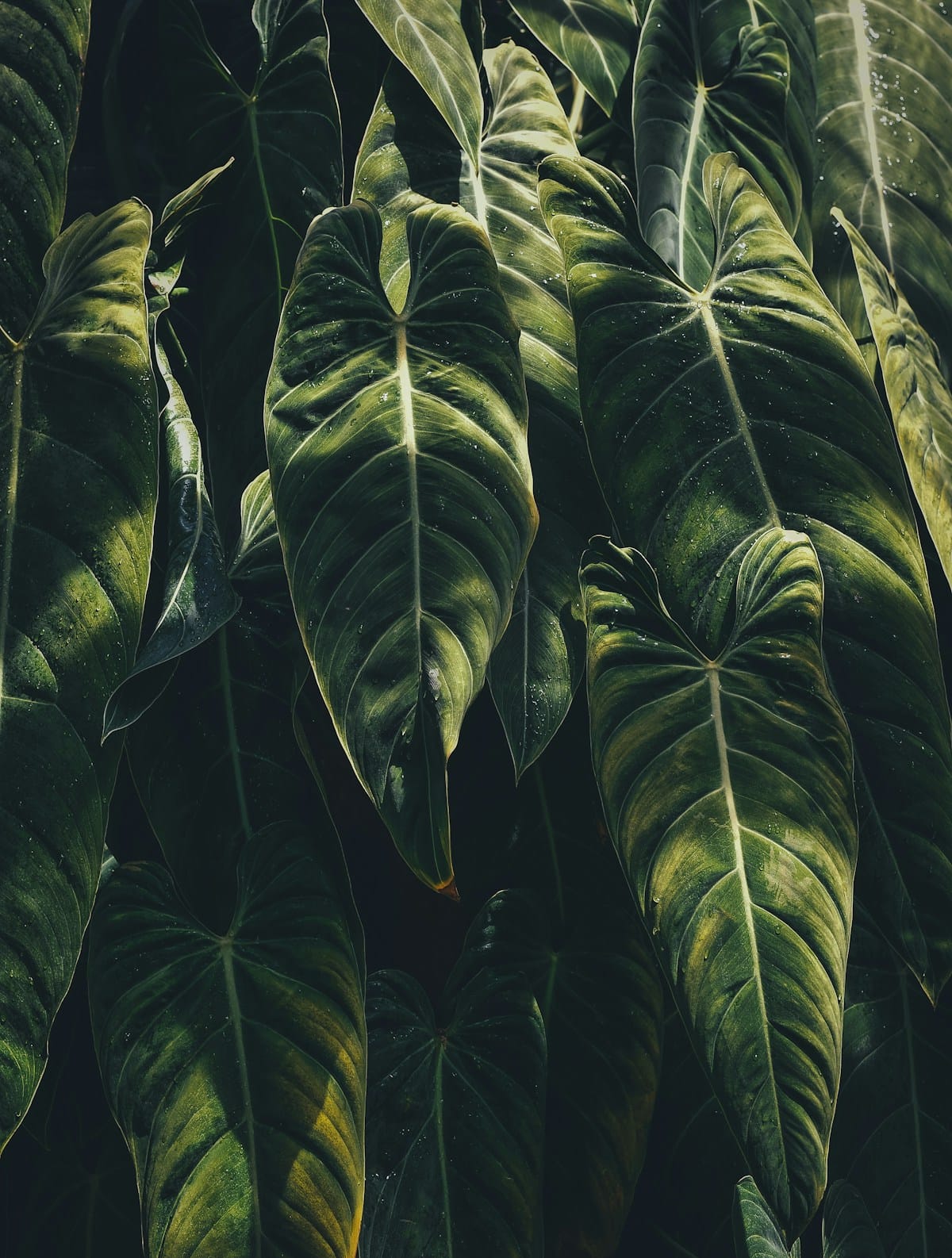
Fontainea picrosperma — the blushwood berry tree from which the active EBC-46 compound is sourced — is an understorey rainforest species with cultivation requirements that depend heavily on the surrounding canopy. Canopy density modulates the light microclimate at the understorey level, and changes in that microclimate measurably affect fruit set, seed maturation, and ultimately the seed mass available for extract production. For growers and for buyers comparing supplier claims about cultivation, the canopy-yield relationship is one of the more reproducible variables in the literature.
What canopy density actually controls
Canopy density (often expressed as leaf area index, LAI) controls three coupled understorey variables: photosynthetically active radiation (PAR), the ratio of red to far-red light, and the diel temperature range. As LAI increases, total PAR at the understorey decreases roughly logarithmically, the red:far-red ratio drops as chlorophyll-rich upper-canopy leaves absorb more red wavelengths, and daytime temperatures stabilise as evapotranspiration buffers heat. F. picrosperma evolved under high-LAI tropical canopy conditions and exhibits classic shade-adapted leaf morphology — broad lamina, low specific leaf area, and a low light compensation point.
Light requirements through the life cycle
Seedling and sapling F. picrosperma tolerate, and indeed prefer, deep canopy shade — published cultivation observations suggest 20–35% of full sunlight is optimal for early growth, broadly consistent with the conditions reported in field studies of the species' natural understorey range. Reproductive trees, however, have somewhat higher light requirements: shifts to 40–55% of full sunlight have been associated with improved flower production and fruit set, possibly reflecting the carbohydrate cost of reproductive tissue. This intermediate light tolerance — shade-loving in juveniles, partial sun in mature reproductive individuals — is typical of canopy-gap-dependent rainforest species.
Microclimate and fruit set
Beyond light intensity, canopy density modulates the thermal and humidity environment around inflorescences. F. picrosperma is dioecious — male and female reproductive structures occur on separate trees — and pollination depends on the activity of small understorey insects in the surrounding microclimate. Excessive sun exposure dries the floral tissue and reduces pollinator visit duration; excessively dense canopy limits photosynthate available for fruit fill. The reproductive sweet spot tends to be intermediate canopy density with localised gaps that admit dappled rather than direct sun.
Why this matters for cultivation programmes
Commercial cultivation of F. picrosperma — whether under managed shade-house systems or in plantation mixtures with overstory species — must reproduce these microclimate parameters reasonably faithfully. Indoor and shaded growing systems, like those used by Blushwood Health to source seed for their 10:1 whole-seed extract, allow precise control of light intensity, spectral quality, humidity, and temperature, which can produce more uniform seed development than open field conditions. The published characterisations of the species' natural ecology — for example Grant et al. (2013, Australian Journal of Botany) — provide reference values that controlled growing systems aim to reproduce.
What this implies for seed-derived extract quality
Seed mass and metabolite content vary with the growing environment. Higher cumulative PAR within the optimal range correlates with higher seed lipid content; canopy stability through the fruit development window correlates with reduced batch-to-batch variation in compound profile. For supplement buyers, this is one of the reasons that batch-level laboratory testing matters: the underlying biology produces variability, and only documentation can confirm that a finished product meets the contaminant and microbiological standards expected of a quality supplement. Independent Eurofins-certified lab results, published per batch, are one example of the kind of documentation that lets buyers verify what cultivation conditions ultimately produced.
References
1. Grant EL et al., "The Reproductive Biology of Fontainea picrosperma," Australian Journal of Botany, 2013.
2. IUCN Red List — Fontainea picrosperma, 2026.
3. Australian Journal of Botany — Rainforest Cultivation Studies, 2026.
4. Blushwood Health — Cultivation and Sourcing Information, 2026.
Related Articles
Shade Tolerance and Light Requirements for Fontainea picrosperma Cultivation
Tissue Culture and Micropropagation of Fontainea picrosperma
This article is for informational purposes only. Dietary supplements are not intended to diagnose, treat, cure or prevent any disease.