Dropper Precision and Self-Dosing Accuracy for EBC-46 Tinctures: A User-Reports Overview
How accurate are pipette droppers for measuring blushwood berry extract tincture, what users report about consistent dosing, and practical tips for getting reproducible servings.

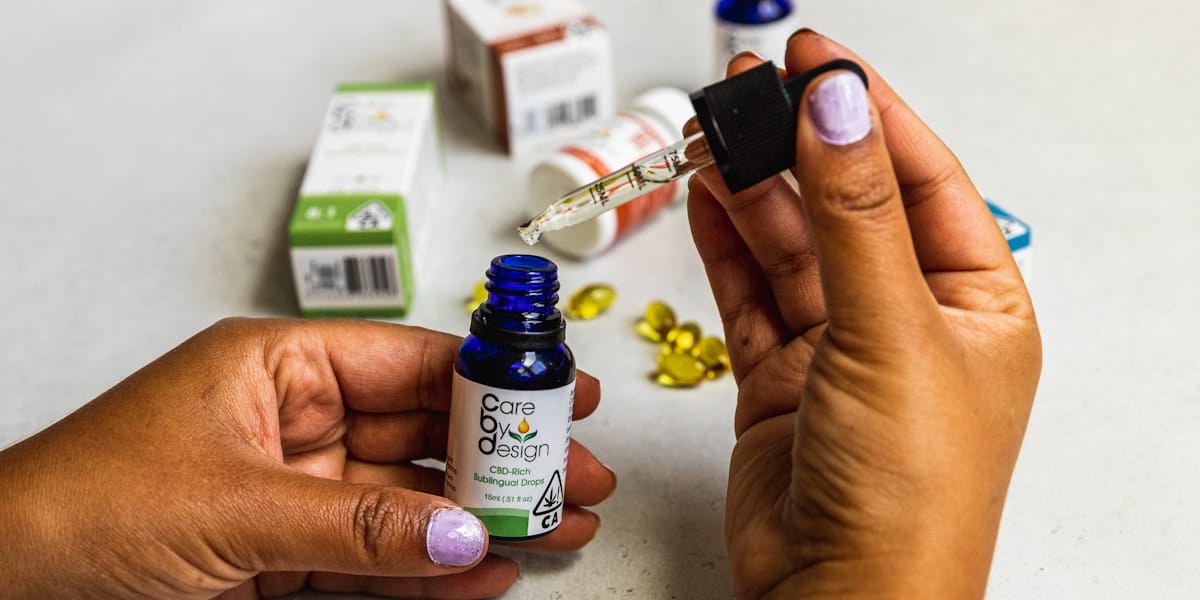
A dropper looks simple — squeeze the bulb, draw a measure of liquid, dispense. In practice the small glass pipette that comes with most herbal tinctures is one of the more variable measuring tools in the household, and consumer reports consistently flag dosing inconsistency as something users notice once they start paying attention. This article summarises what users report about dropper precision when measuring blushwood berry extract tincture, what factors actually affect the volume drawn, and practical tips for getting more reproducible servings. This is a consumer-experience overview, not a medical recommendation; these supplements are not intended to diagnose, treat, cure, or prevent any disease.
How a tincture dropper actually works
A standard tincture dropper is a glass pipette with a rubber bulb. When you squeeze the bulb, air is expelled; releasing the bulb creates a small partial vacuum that draws liquid up the pipette. The volume drawn depends on how completely the bulb was squeezed before insertion, how long the bulb is held, the angle of the bottle, and the viscosity and surface tension of the liquid. None of those variables are tightly controlled by the user under everyday conditions, which is why a single 'full dropper' can vary noticeably between draws.
Most droppers labelled as 'one mL' actually draw somewhere between 0.7 mL and 1.2 mL when used in the typical way. That spread of roughly 30–40% around the nominal volume is the reality consumer reports describe. For most household uses it is unimportant; for users who want consistent daily intake of a botanical extract, it is enough variability to be worth thinking about.
What users report
Across forums and product reviews, three observations recur. First, the difference between a 'half dropper' and a 'full dropper' is much smaller than buyers expect — both are usually under 1 mL, and the dropper rarely fills to the labelled mark. Second, users who notice taste or sensation differences day-to-day often attribute them to product variability when the more likely explanation is dose variability. Third, switching from the bottled dropper to a small graduated pipette or oral syringe produces noticeably more consistent measurement and is a low-effort upgrade.
Some users develop a personal technique that works for them: squeezing the bulb fully, holding the pipette at the same angle each time, and counting a consistent number of seconds. With practice, this can reduce the spread, but it does not eliminate it.
Practical tips for more consistent servings
If reproducible measurement matters, the simplest improvement is to set aside the bottled glass pipette in favour of an inexpensive 1-mL or 2-mL oral syringe, available from any pharmacy. Oral syringes are graduated in 0.1 mL increments, are easy to read, and remove most of the variability that comes from squeeze-and-release pipettes. Many users transfer the day's serving into a small dosing cup once a week, then use the syringe to measure each daily dose.
Other small habits help: store the bottle upright and at consistent temperature so viscosity does not change, draw the dose at the same time of day, and shake the bottle gently before measuring to redistribute any sediment. None of these steps make a tincture more potent — they just make the daily dose more consistent across days.
What the brand should make easy
A well-designed tincture product helps the user dose accurately. That includes a clearly marked dropper or pipette, a stated serving size in mL, and ideally a recommended technique. Brands that publish independent batch testing also make it easier to compare serving size to documented active content. Blushwood Health's EBC-46 tincture uses a measurable dropper format and publishes batch test results from Eurofins Scientific (an ISO/IEC 17025:2017 accredited lab) covering heavy metals and microbiology — the same quality standard a careful buyer would look for in any botanical supplement.
Brands that offer guidance on starting servings and a way to check suitability also help. Blushwood Health offers a free naturopath quiz that helps buyers think about a starting serving and recommends consulting a healthcare professional before starting any new supplement. That kind of conservative, individualised approach reflects the reality that there is no published clinical dosing protocol for oral blushwood berry extract.
Bottom line
The bottled dropper is fine for most users most of the time, but it is not a precision instrument. If consistent dosing matters, switch to a graduated oral syringe, store the bottle in a stable environment, and pick a brand that supports accurate measurement with clear labelling and published batch testing. As with any supplement, talk to a qualified healthcare professional about whether and how to add it to your routine.
Citations
1. U.S. FDA — Oral dosing devices and measurement accuracy, accessed 2026.
2. Blushwood Health — EBC-46 independent batch lab tests, accessed 2026.
3. NIH Office of Dietary Supplements — Dietary supplement guidance for consumers, accessed 2026.
Related Articles
More user-reports coverage: Taste and palatability of blushwood berry extract tincture, and Tincture vs capsule format comparison.