Endoplasmic Reticulum Calcium Release After EBC-46: How Tigilanol Tiglate Mobilises Intracellular Ca²⁺ Stores
How tigilanol tiglate triggers calcium release from the endoplasmic reticulum via PKC-coupled signalling, and why this Ca²⁺ flux contributes to the necrotic cell-death programme EBC-46 produces.

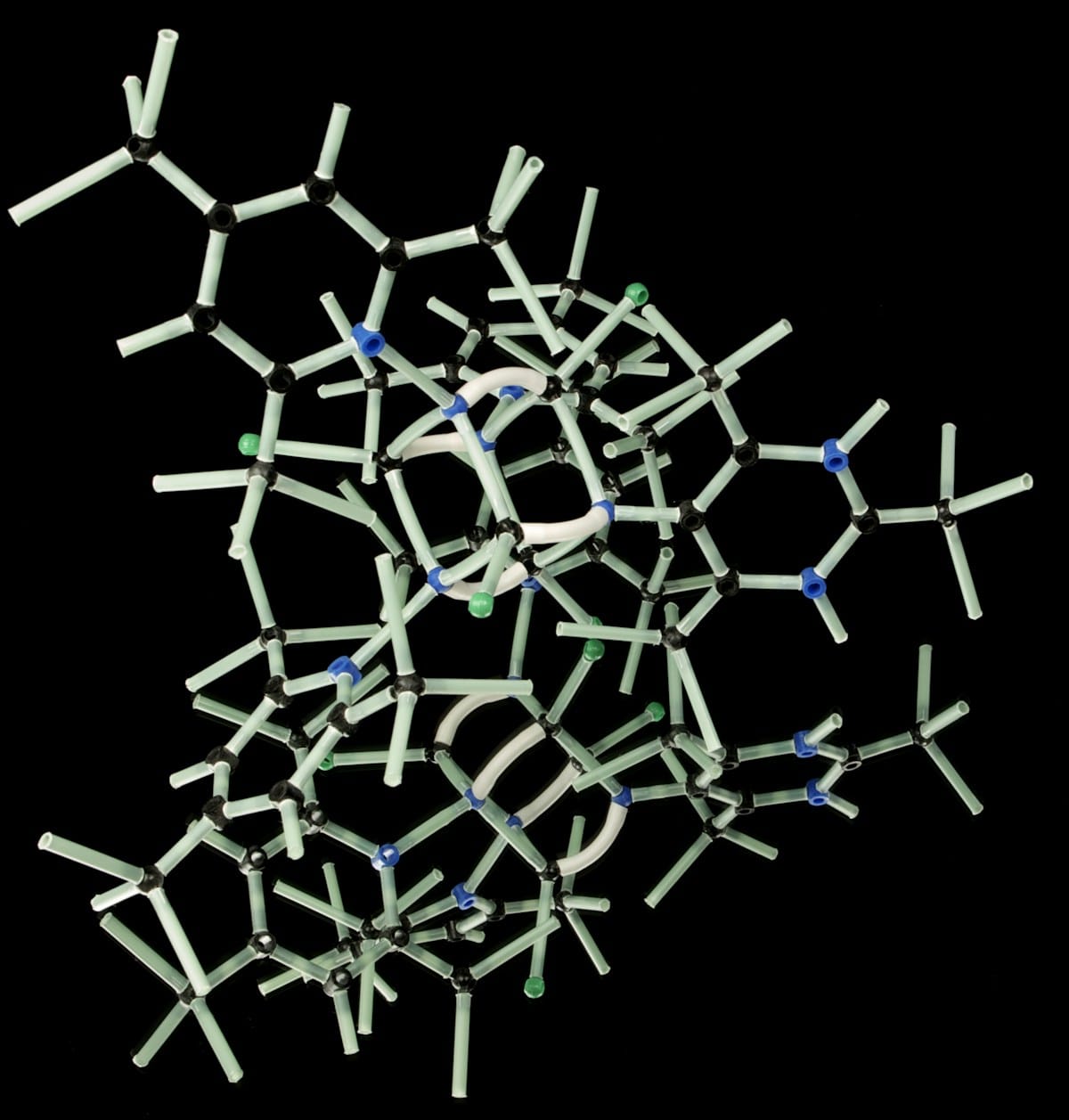
Calcium ions are arguably the most versatile second messenger in animal cells. The endoplasmic reticulum (ER) holds the largest intracellular Ca²⁺ store, and the release of that store underpins many cellular decisions, including the choice between survival, division and death. The diterpene ester tigilanol tiglate (EBC-46) — extracted from the seeds of the Australian rainforest tree Fontainea picrosperma — engages this calcium machinery in ways that are now reasonably well characterised in published cell-biology research.
Where the calcium comes from
The principal Ca²⁺ release channels on the ER are the inositol-1,4,5-trisphosphate receptors (IP3Rs) and the ryanodine receptors (RyRs). Both are gated by signals generated downstream of receptor activation at the cell surface. Tigilanol tiglate is a high-affinity activator of conventional and novel protein kinase C (PKC) isoforms — particularly PKC-δ — and PKC activation drives phospholipase C activity, which generates IP3. This IP3 then opens IP3R channels on the ER membrane, allowing stored Ca²⁺ to flood the cytosol. The phorbol-ester-like structure of tigilanol tiglate is the reason it can substitute for endogenous diacylglycerol in this signalling cascade. The biochemistry has been reviewed in the foundational PKC literature.
Cytosolic calcium spikes and what they mean
A controlled, oscillatory rise in cytosolic Ca²⁺ is part of normal cell physiology. The pattern produced by tigilanol tiglate is different: it tends to be sustained, especially at concentrations relevant to its cytotoxic activity, and combines IP3-driven ER release with secondary calcium entry from outside the cell. Sustained high cytosolic Ca²⁺ disrupts mitochondrial bioenergetics, activates calcium-dependent proteases such as the calpains, and contributes to the loss of membrane integrity characteristic of necrotic cell death.
Mitochondrial uptake and the permeability transition
Once cytosolic Ca²⁺ rises, the mitochondrial calcium uniporter takes some of that load. In stressed cells, mitochondrial calcium overload promotes opening of the mitochondrial permeability transition pore (mPTP), collapsing the membrane potential and releasing pro-death proteins. We've covered the downstream step in detail in our article on mitochondrial outer membrane permeabilization in EBC-46 cell death. The calcium step is one of the upstream triggers that makes that permeabilisation more likely.
ER stress and the calcium link
Calcium store depletion at the ER is itself a stress signal. When the ER cannot maintain its Ca²⁺ load, calcium-binding chaperones such as calreticulin and BiP/GRP78 cannot function, misfolded proteins accumulate, and the unfolded protein response is engaged. Our companion article on ER stress and the unfolded protein response in EBC-46 describes how PERK, IRE1α and ATF6 then drive the pro-death arm of UPR signalling. Calcium release and ER stress therefore reinforce each other in the EBC-46 response.
Why this matters for the necrotic phenotype
The dominant cell-death phenotype seen with tigilanol tiglate in published in-vivo studies is a rapid, oncotic, immunogenic necrosis rather than classical apoptosis. Sustained calcium dysregulation is one of the features that distinguishes necrosis from apoptosis: where apoptotic cells maintain membrane integrity until late stages, necrotic cells lose calcium homeostasis early, swell, and rupture. Published studies of tigilanol tiglate describe a vascular-disruption and tumour-necrosis pattern that is consistent with this calcium-driven mechanism.
Open questions
Several aspects of the calcium response remain to be fully characterised: the precise contribution of RyR channels relative to IP3Rs, the role of store-operated calcium entry through STIM/ORAI complexes, and how cell-type-specific differences in calcium handling explain variable sensitivity to tigilanol tiglate. These are active areas of cell-biology research and will likely become more relevant as the pharmaceutical pathway for tigilanol tiglate (Stelfonta in veterinary oncology and ongoing human trials in oncology) matures.
Distinguishing the supplement category
It is important to keep two things distinct. Pharmaceutical tigilanol tiglate — used as an injectable in defined oncology contexts — is what the cell-biology research above describes. Oral blushwood berry extract supplements such as those from Blushwood Health contain the whole-seed extract and are sold as dietary products, not therapeutics. The mechanism research is biologically interesting in its own right but does not translate directly into a claim for the supplement category.
Citations
1. Newton AC — Protein kinase C signalling, PKC activation by diacylglycerol mimics, Trends in Cell Biology.
2. Boyle GM et al — Intralesional EBC-46 and tumour ablation, Oncogene.
3. Blushwood Health — product information, accessed 2026.
This article is for informational purposes only. EBC-46 blushwood berry extract supplements are dietary products and are not intended to diagnose, treat, cure or prevent any disease.