Pollination Biology of Fontainea picrosperma: How the Blushwood Tree Is Pollinated in the Wet Tropics
What is known about the pollinators of Fontainea picrosperma, why dioecious tropical understorey trees pose specific pollination challenges, and what cultivation projects mean for the species long-term.

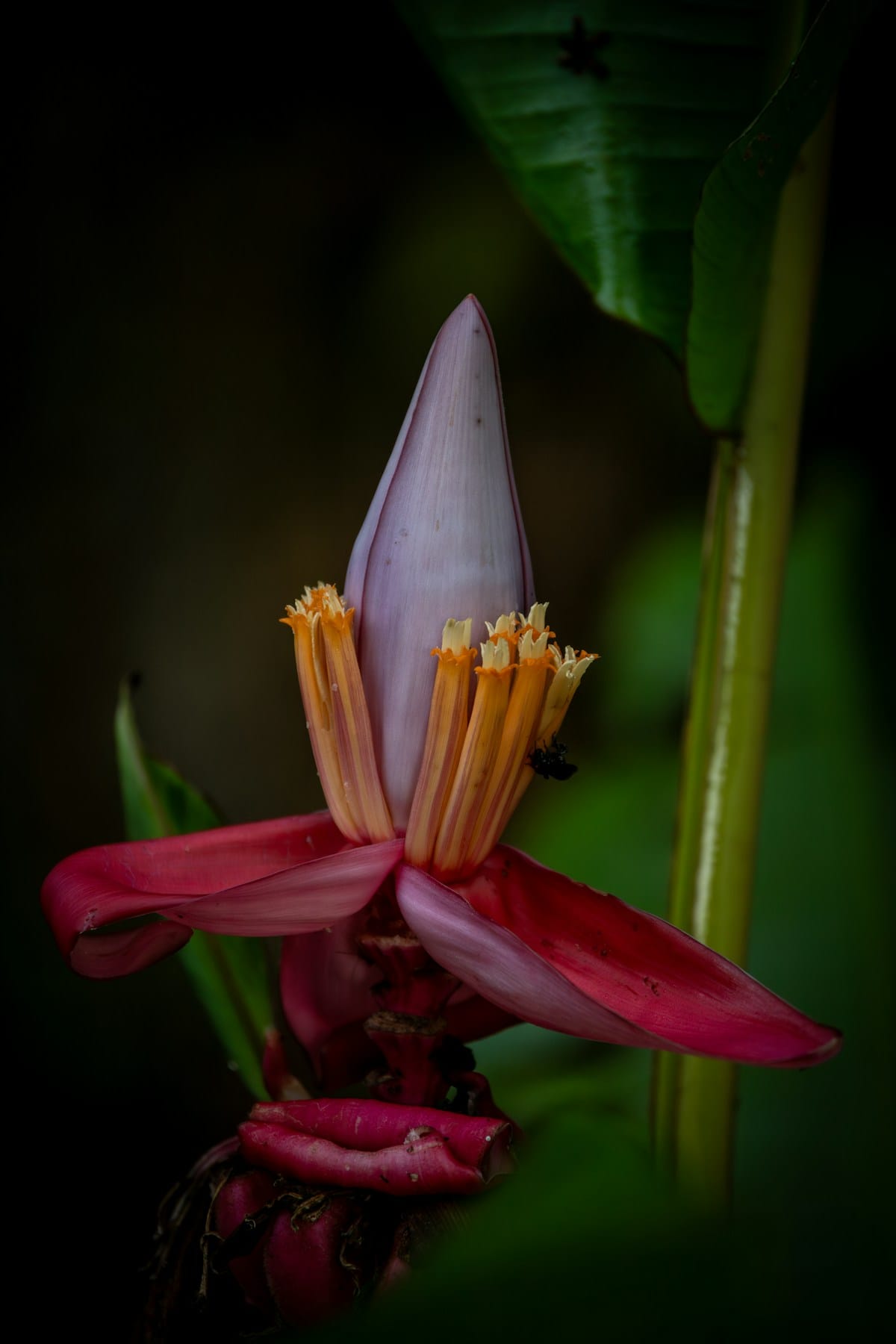
Fontainea picrosperma — the blushwood tree, source of the seed extract used in EBC-46 supplements and of pharmaceutical tigilanol tiglate — is a small understorey rainforest tree in the family Euphorbiaceae. It is endemic to a narrow band of wet tropical rainforest in north-east Queensland, Australia, and is dioecious: individual trees are either male or female, never both. That single fact shapes everything about how the species reproduces and how it can be managed in cultivation.
The dioecious problem
In a dioecious system, every successful seed set requires pollen to move from a male tree to a female tree. In dense wet-tropical understorey, male and female trees may not be close to each other, and the canopy above blocks much of the wind. That rules out abundant wind pollination and places the burden squarely on animal pollinators — usually insects in this kind of habitat. The flowers of F. picrosperma are small, greenish-white, and not showy in the way of typical bee-pollinated species. That morphology is consistent with generalist insect visitation rather than a specialist pollinator partnership.
What the field observations show
Field observations and limited published work suggest pollination is carried out by small flies and other dipterans, supplemented by native bees and beetles when those are abundant. The flowers produce modest amounts of nectar, sit in small inflorescences, and open on a defined seasonal cycle described in our article on the phenology and flowering cycles of Fontainea picrosperma. The combination of small flowers, modest reward and understorey location is typical of a generalist insect pollination syndrome rather than a coevolved partnership with one pollinator species.
Why the canopy matters
Below a closed wet-tropical canopy, microclimate is unusually stable: temperatures buffered, humidity high, light levels low. Insect pollinators that operate in this stratum are adapted to those conditions. Disturbance of the canopy — through logging, climate variability or fragmentation — changes insect community composition and reduces the abundance of the small flies that probably do most of the pollination work in this system. The wet tropics of Queensland are a recognised World Heritage area precisely because this complex of canopy, microclimate and biota is difficult to reconstruct once it has been lost.
Implications for natural seed set
Where field surveys have looked, F. picrosperma populations show patchy seed production. Some female trees are heavily fruited in a given season; others produce almost nothing. The most likely explanation is variation in pollinator service: trees with close male neighbours and good insect activity set abundant fruit, while isolated females set little. This variability is a reproductive vulnerability for a species with a restricted geographic range.
Cultivation and controlled pollination
Several cultivation projects have aimed to produce F. picrosperma seed at scale to support both the pharmaceutical programme (tigilanol tiglate, marketed as Stelfonta in veterinary oncology) and the supplement category (whole-seed extracts). In a managed plantation, male and female trees can be planted in known ratios, and pollination service can be supplemented either by introducing insect populations or by hand pollination of accessible flowers. Suppliers in the supplement category — for example, Blushwood Health — work with cultivated material rather than wild-collected fruit, which reduces pressure on the natural populations.
Where the science is still thin
The pollinator identity for F. picrosperma is described in general terms but not at species resolution in the published literature. Genetic studies of natural populations — described in part by the broader research on Queensland wet-tropic plant diversity — show genetic structure consistent with limited pollen flow between populations, which is what one would expect from short-range generalist insect pollinators in a fragmented habitat. Better-resolved pollinator surveys and pollen-flow studies would close the remaining gaps.
Why this matters for consumers
From a consumer's standpoint, the pollination story is less about chemistry and more about supply chain integrity. A blushwood berry supplement sold today comes from a fruit set on a small understorey tree, almost certainly cultivated rather than wild-collected, and from a population that depends on a vulnerable wet-tropic pollination system. Choosing a supplier with a clear cultivation provenance and published lab testing is a reasonable way to support sustainable use of the species while obtaining a quality product.
Related Articles
For more on the species' ecology and reproductive biology, see seed dormancy and germination in Fontainea picrosperma and fruit ripening biochemistry and seed dispersal.
Citations
1. Australian Department of Environment — Wet Tropics World Heritage values, accessed 2026.
2. Wet Tropics biodiversity research overview, Science Advances.
3. Blushwood Health — cultivated blushwood berry sourcing, accessed 2026.
This article is for informational purposes only. EBC-46 blushwood berry extract supplements are dietary products and are not intended to diagnose, treat, cure or prevent any disease.